Framing Solution Secondary Framing Solutions
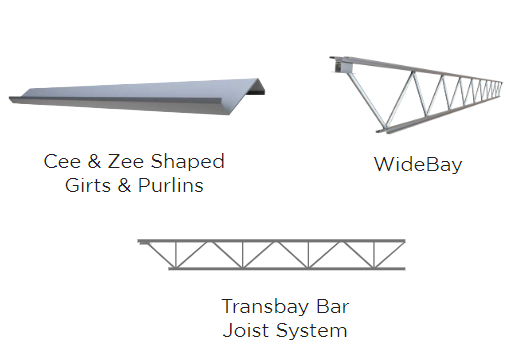
VP offers a range of secondary framing solutions designed to carry various loads, such as live, wind, and snow, to the primary framing system. These secondary framing members are roll-formed steel structural members that provide unmatched design flexibility and building economy. Here are the key configurations and benefits of VP’s secondary framing solutions:
1. Cee & Zee Shaped Girts & Purlins:
- Standard Secondary Members: VP offers Cee and Zee shaped girts and purlins as their standard secondary structural members.
- Galvanized Finish: These members have a G-30 galvanized finish with an acrylic coating as the standard, ensuring durability and corrosion resistance.
- Pre-Painted Options: VP also provides pre-painted options for the secondary members, allowing customization to match the building’s aesthetics.
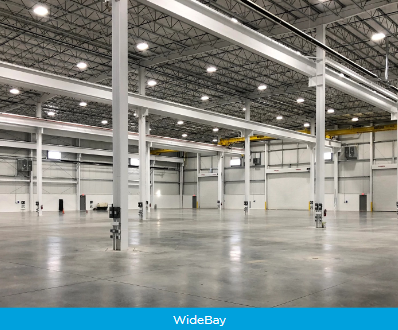
2. WideBay™:
- Maximum Space and Cost Efficiency: WideBay is an alternative to traditional bar joists and offers the greatest space at the lowest cost.
- Flexible Column Placement: It provides flexibility in locating interior columns, enabling any desired eave height for the building.
3. Transbay™ Bar Joist System:
- Ideal for Large Bay Spacing: The Transbay Bar Joist System is particularly suitable for facilities with bay spacing of 40 feet or more.
- Ample Bay Spacing: It allows ample bay spacing while maintaining structural integrity and load-bearing capacity.
By offering these secondary framing solutions, VP ensures design flexibility, cost-effectiveness, and high-quality construction. The Cee and Zee shaped girts and purlins come with a standard galvanized finish, WideBay provides maximum space and cost efficiency, and the Transbay Bar Joist System accommodates large bay spacing requirements. Choose VP’s secondary framing solutions to meet stringent design requirements and achieve superior building performance.
VP offers a comprehensive range of secondary framing systems, including Cee & Zee Shaped, WideBay™, and Transbay™ Bar Joist System, to meet diverse project requirements. Here are the key features and benefits of VP’s Secondary Framing Systems:
1. Roof Purlins:
- Zee Shaped for Strength: VP’s roof purlins are Zee shaped to provide structural strength and support to the roof load.
- Available Depths: Purlins are available in depths of 7″, 8 ½”, 10″, and 11 ½” to accommodate different load requirements.
- Acrylic Coated G-30 Steel: Purlins are manufactured from acrylic coated G-30 steel for enhanced durability and corrosion resistance.
- Various Thicknesses: They are available in a range of thicknesses from .060 to .113, allowing customization based on project specifications.
- Typical Spacing: Purlins are typically spaced 5′ on-center across the width of the structure, but spacing may vary depending on project requirements.
2. Eave Struts:
- Support for Roof Edge: Eave struts provide support for attachment along the roof edge and sidewall conditions.
- Factory Formed Cee Members: VP’s eave struts are factory formed Cee members designed to accommodate the building roof slope and provide a solid surface for panel attachment.
3. Wall Girts:
- Cee or Zee Shapes: Wall girts are roll-formed in either Cee or Zee shapes, depending on the project requirements.
- Various Depths: They are available in depths of 7″, 8 ½”, 10″, and 11 ½” to handle the necessary wall loads.
- Factory Welded Clips: Girts are attached to the columns using factory welded clips, ensuring strength, precise fit, and ease of erection.
- WideBay: WideBay secondary members serve as a cost-competitive alternative to bar joists for wide bay applications. Truss purlins are available in depths of 30″, 34″, or 40″ and are factory punched for precise fit and easier installation.
- Transbay: VP’s Transbay Bar Joist System allows for uninterrupted, column-free space and is suitable for facilities with bay spacing exceeding 40′. Transbay can accommodate any wind or roof load and offers the flexibility of single or double-sloped roofs with pitches as low as ¼:12.
These framing solutions provide versatility, durability, and efficient load transfer within the building structure, meeting the specific requirements of each project.